Charting Regulatory Twists in Cryptographic Verification Systems That Bolster Trust Across Remote Multiplayer Card Formats
Written by Olivia Hoffmann · May 20, 2026
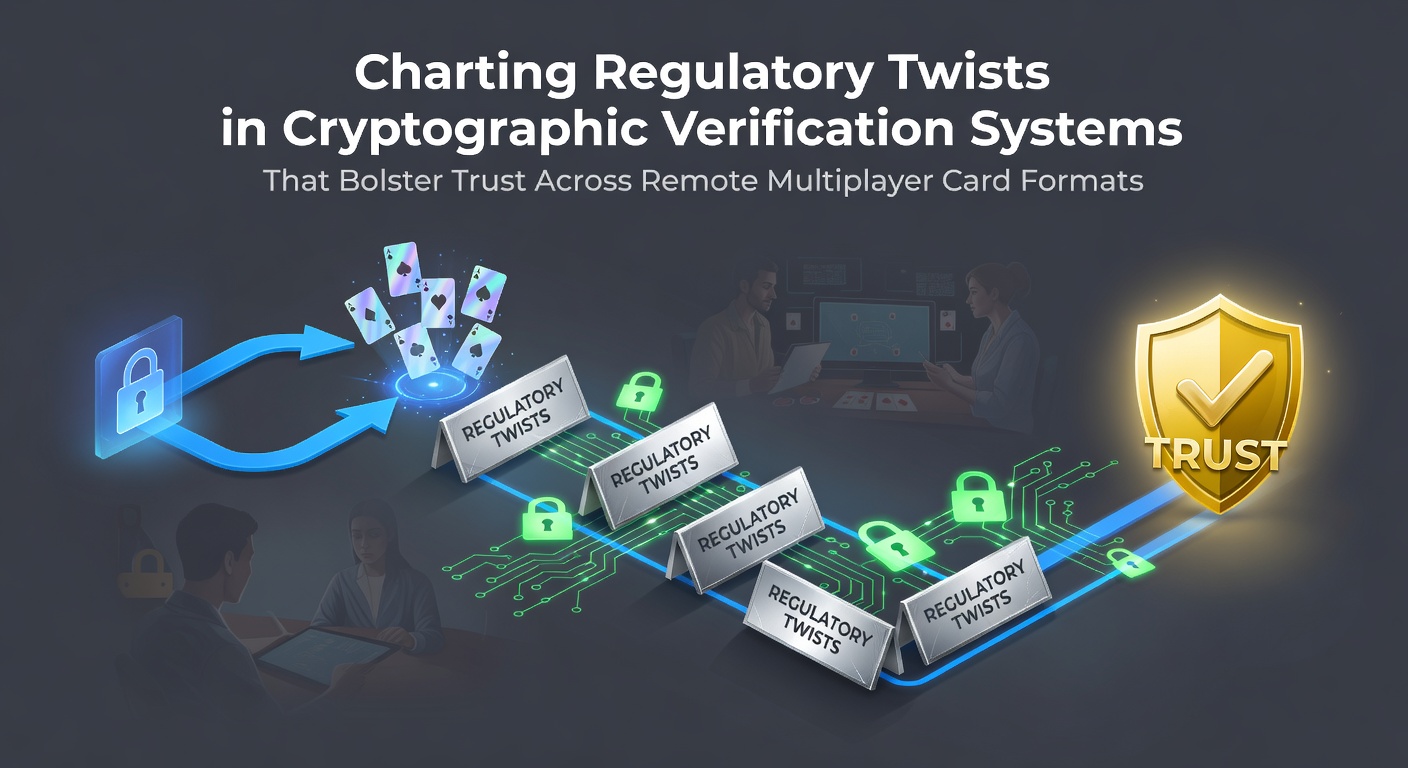
Charting Regulatory Twists in Cryptographic Verification Systems That Bolster Trust Across Remote Multiplayer Card Formats
Regulatory landscapes surrounding cryptographic verification systems continue to shift as authorities adapt to the demands of remote multiplayer card formats that rely on secure, verifiable interactions between participants separated by distance. These systems employ techniques such as zero-knowledge proofs and distributed ledger entries to confirm game integrity without exposing sensitive data, and regulators in multiple jurisdictions have introduced new guidelines that refine how such methods integrate with compliance requirements.
Core Mechanisms Driving Verification
Developers build cryptographic verification around protocols that generate mathematical proofs for each card shuffle, deal, and outcome, allowing participants to audit results independently. Research from academic institutions shows these protocols reduce opportunities for manipulation by creating immutable records that third parties can examine later. In practice, one implementation uses homomorphic encryption to process encrypted card data while preserving privacy, and observers note its adoption across platforms handling formats like online poker and bridge tournaments.
Recent Regulatory Adjustments
Authorities have layered additional reporting obligations onto operators that deploy these verification tools, requiring detailed documentation of key generation processes and audit trails. Data from industry reports indicates that standards updated in early 2026 emphasize interoperability between different cryptographic suites, which helps platforms maintain consistency when serving users across borders. Yet the adjustments also introduce stricter thresholds for randomness testing, compelling providers to align their random number generators with updated benchmarks set by technical bodies.
Developments Emerging in May 2026
By May 2026 several oversight agencies had begun pilot programs that test real-time monitoring of cryptographic outputs during live card sessions. Figures released by the Australian Communications and Media Authority reveal increased collaboration with technical working groups to certify verification modules before deployment. These efforts focus on ensuring that remote formats maintain fairness even when network latency affects proof generation times, and participants in the pilots report smoother integration of verification layers into existing game engines.
One notable change involves harmonization efforts between North American and European frameworks, where regulators now accept mutual recognition of certain cryptographic audits. This reduces duplication for operators who manage multiplayer card environments serving diverse player bases. Evidence from joint technical papers suggests the approach cuts certification timelines by several weeks while preserving the rigor needed to detect anomalies in proof chains.
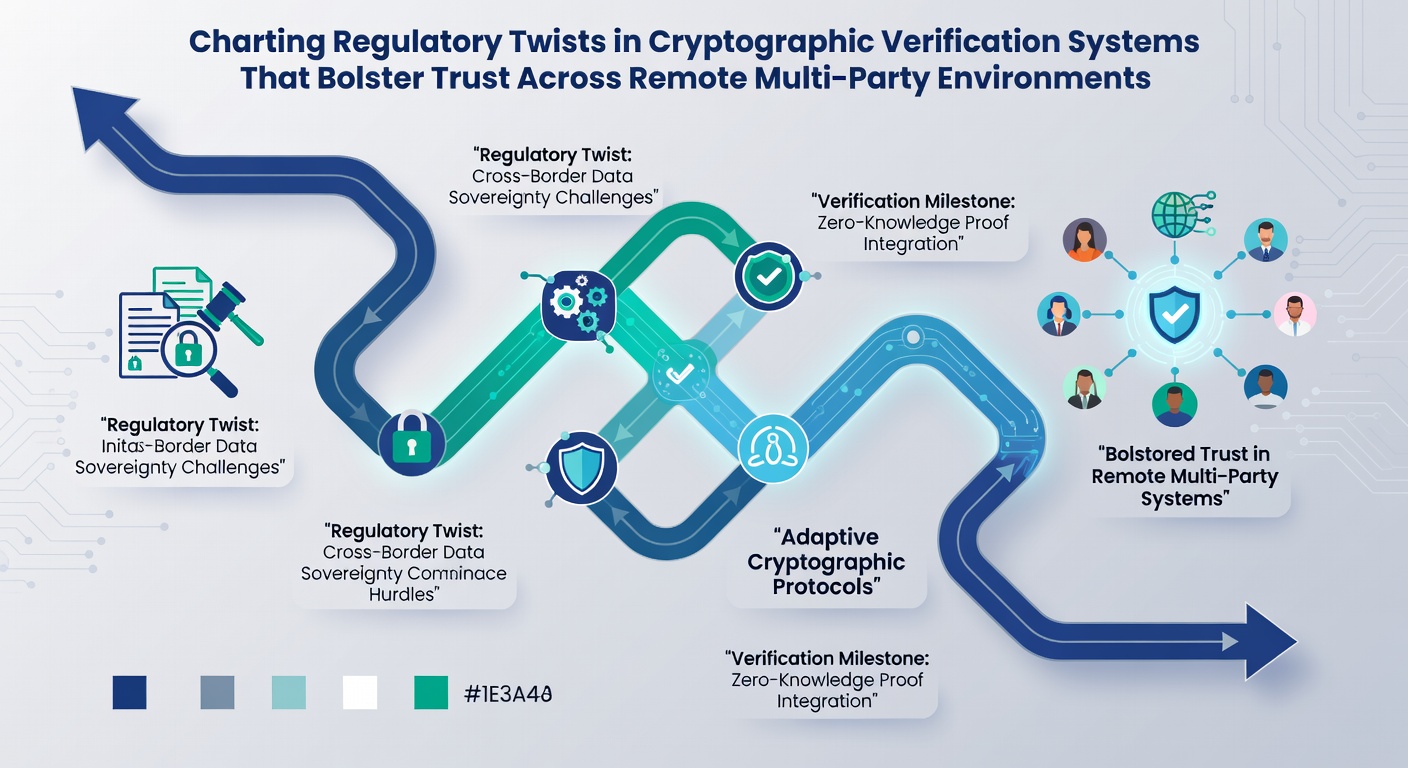
Building Participant Confidence Through Standards
Trust in remote card formats grows when verification systems undergo regular third-party scrutiny that confirms both correctness and resistance to tampering. Regulators require operators to publish summary statistics on verification success rates, which allows players to review aggregate performance without accessing proprietary code. Studies conducted by research consortia demonstrate that transparent reporting correlates with higher retention in competitive card environments where participants value verifiable fairness over opaque alternatives.
Additional rules address how cryptographic keys rotate during extended sessions, preventing any single point of failure from compromising an entire tournament. Observers point to cases where platforms adopted automated key-management services that log every rotation event on permissioned ledgers, satisfying new audit demands without interrupting gameplay flow. These measures apply particularly to formats involving large numbers of simultaneous players, where coordination challenges multiply.
Cross-Jurisdictional Implications
Operators navigating multiple regulatory regimes encounter varying expectations around data localization for cryptographic artifacts. Canadian federal guidelines, for instance, permit storage of verification proofs on servers located outside national borders provided encryption meets specified strength levels. Meanwhile, emerging frameworks in parts of Asia stress local attestation hardware that signs proofs before transmission, adding another layer to compliance checklists.
Industry associations have responded by developing template compliance matrices that map regulatory requirements to specific cryptographic primitives. These resources help smaller developers align their systems with evolving rules, and adoption data indicates widespread use among teams building tools for niche card formats such as whist variants or pinochle leagues conducted remotely.
Conclusion
Regulatory twists continue to shape how cryptographic verification operates within remote multiplayer card formats, with authorities refining standards around proof generation, key handling, and audit accessibility. As frameworks evolve through 2026, operators gain clearer pathways for implementation while participants benefit from strengthened assurances of integrity across distributed sessions. Continued coordination among technical bodies and regulators supports the steady maturation of these systems that underpin trust in digital card environments.