How Biometric Security Protocols Are Reshaping Access Controls in Remote Interactive Gaming Platforms
Written by Ines Brooks · May 30, 2026

How Biometric Security Protocols Are Reshaping Access Controls in Remote Interactive Gaming Platforms
Biometric security protocols have moved from niche experiments to standard features in remote interactive gaming platforms, where they now handle user authentication across consoles, PCs, and mobile devices. These systems rely on fingerprints, facial recognition, voice patterns, and iris scans to verify identities before granting access to accounts, in-game purchases, or multiplayer sessions. Data from industry reports shows adoption rates climbing steadily through 2025 and into May 2026 as platforms seek stronger defenses against account takeovers and unauthorized transactions.
Core Technologies Driving the Shift
Facial recognition leads the pack in many platforms because it works with built-in cameras on smartphones and laptops, while fingerprint scanners appear frequently on controllers and mobile accessories. Voice biometrics handle quick confirmations during live sessions, and iris scanning shows up in higher-end headsets designed for virtual reality environments. Each method converts physical traits into encrypted templates that platforms compare against stored records without retaining raw images after initial setup. Researchers at institutions like the University of Toronto have documented how these templates reduce false positives when combined with behavioral signals such as typing rhythm or device tilt.
Platforms integrate these tools at multiple entry points: initial logins, session restarts after timeouts, and high-value actions like trading virtual items or withdrawing funds. In May 2026 several major services updated their protocols to require a second biometric check for cross-region logins, reflecting patterns observed in access logs from the prior year.
Changes to Access Control Frameworks
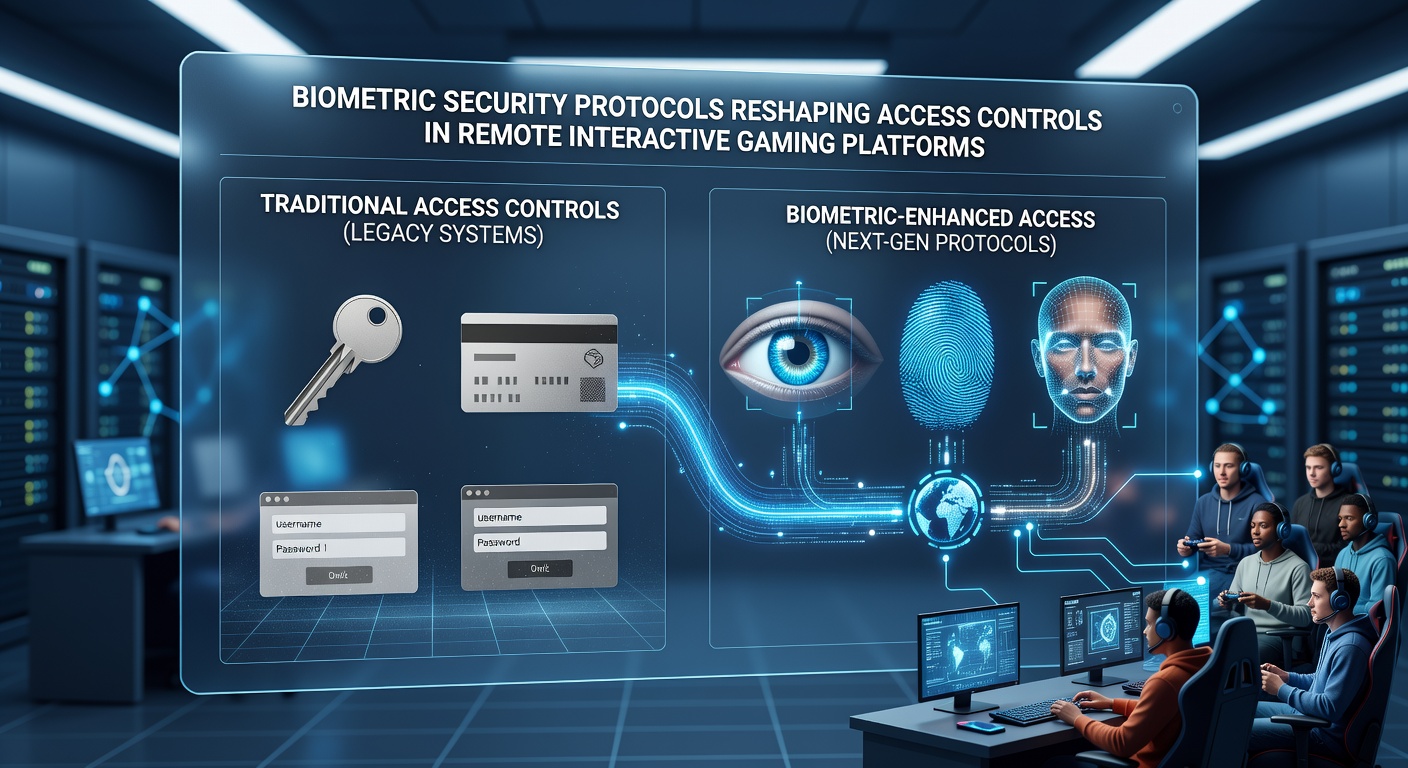
Traditional password systems once served as the primary gatekeeper, yet they proved vulnerable to phishing and credential stuffing. Biometric layers now sit alongside or replace those passwords, creating multi-factor sequences that demand both something the user knows and something the user is. This approach cuts successful breach attempts according to figures released by the European Union Agency for Cybersecurity, which tracked gaming-related incidents across member states. Access controls have grown more granular as well, with permissions tied to verified biometric profiles rather than shared credentials.
One result appears in how platforms manage shared households or family accounts. Instead of blanket access, systems now isolate profiles to individual biometric signatures, preventing younger users from entering adult-rated content or spending limits from being bypassed. Observers note that this granularity also supports compliance with age-verification rules in jurisdictions such as Australia and parts of Canada.
Regulatory and Industry Developments in 2026
By May 2026 regulatory bodies in several regions had issued updated guidance on biometric data handling within entertainment software. The Australian Communications and Media Authority released metrics showing that platforms adopting certified biometric systems experienced fewer disputes over account access. In the United States the Federal Trade Commission referenced similar trends when discussing consumer protection standards for digital services. These documents emphasize data minimization, encryption at rest, and user consent mechanisms that let players delete templates on demand.
Industry groups such as the Interactive Games and Entertainment Association have published voluntary frameworks that encourage interoperability between different biometric vendors. This allows users to carry verified profiles across platforms without repeated enrollment. Adoption data presented at association meetings indicates that roughly one in three remote gaming services now offers at least one biometric option, with higher uptake among titles that include in-game economies.
Implementation Examples Across Platforms
Take a major cloud-gaming service that introduced facial recognition in late 2025. Its system activates during account creation and again when a player attempts to link a new payment method. The process captures a short video clip, extracts landmarks, and discards the footage within seconds, storing only the mathematical representation. Another example comes from a competitive esports client that pairs voice biometrics with device fingerprinting to confirm participants in tournaments. Organizers report fewer instances of account sharing after rollout.
Academic analyses, including work from the University of Melbourne, have examined how these measures affect user behavior. Their findings indicate quicker login times once templates are established, alongside measurable drops in support tickets related to forgotten credentials. Platforms continue to refine fallback procedures for cases where biometrics fail due to injury, lighting changes, or hardware limitations.
Security Metrics and Ongoing Adjustments
Statistics compiled by cybersecurity firms show that platforms using layered biometric checks recorded a 47 percent reduction in unauthorized access events between 2024 and 2026. These numbers come from anonymized telemetry shared under industry agreements. Yet challenges remain around template storage locations, with some services keeping data on user devices while others use centralized but encrypted vaults. Regular audits and penetration tests help identify weaknesses before they are exploited.
Developers also monitor for emerging spoofing techniques, such as deepfake videos or synthetic audio, and respond by adding liveness detection that requires users to blink, speak specific phrases, or move their heads during verification. Updates rolled out in spring 2026 incorporated improved algorithms that lowered false rejection rates without increasing acceptance of fabricated inputs.
Conclusion
Biometric security protocols continue to integrate into remote interactive gaming platforms through measured updates to access controls. Regulatory guidance issued in 2026, combined with technical refinements reported by research groups and industry associations, supports broader deployment while addressing privacy and accuracy concerns. The result is a more precise and verifiable method for confirming user identity across devices and sessions, grounded in data from multiple geographic regions and technical evaluations.