Patterns of Promotional Engagement Vary by Player Demographics in Virtual Gaming Worlds
Written by Harper Keller · Aug 22, 2026

Patterns of Promotional Engagement Vary by Player Demographics in Virtual Gaming Worlds
Virtual gaming platforms track how different demographic groups interact with promotional offers, and data shows clear variations tied to age, gender, income levels, adn geographic location. Researchers at multiple institutions have compiled player behavior metrics that reveal these patterns without attributing causation to any single factor.
Age-Based Variations in Offer Redemption
Players aged 18 to 34 demonstrate higher rates of claiming deposit-match bonuses and free spin packages compared with those over 55, according to aggregated platform analytics released in mid-2026. Younger cohorts tend to engage more frequently with time-limited offers that require social sharing or leaderboard participation, while older players show stronger responses to loyalty point multipliers that accumulate over repeated sessions. A study conducted across North American operators found that the 25-to-34 segment redeemed 42 percent of available welcome packages within the first week of account creation, whereas the 45-plus group averaged closer to 27 percent for the same category of promotions.
August 2026 reports from several major platforms indicated a seasonal uptick in offer utilization among college-aged users during back-to-school periods, coinciding with increased mobile play sessions. These trends align with broader observations that digital natives navigate in-app navigation and terms-and-conditions reviews more quickly than older demographics.
Gender and Preference Divergence
Data collected by Canadian provincial regulators shows women comprise a growing share of players who activate cashback promotions on table games and live dealer formats, whereas men more often select free-to-play tournament entries tied to slot libraries. The differences appear most pronounced in the 30-to-44 age bracket, where female players redeemed 31 percent more reload bonuses than their male counterparts during the same observation window. Observers note that marketing language emphasizing risk-free play periods correlates with higher uptake among female users across multiple jurisdictions.
Income, Education, and Geographic Influences
Higher-income brackets display lower overall redemption rates for small-value offers yet maintain steady engagement with high-tier VIP packages that require larger initial deposits. Educational attainment also correlates with how thoroughly players review wagering requirements before accepting terms, according to findings published by the Australian Gambling Research Centre. Urban residents in high-density regions access mobile-optimized promotions at greater volume than rural players, partly because of consistent high-speed connections that support real-time push notifications.
European operators reported that players in Nordic countries utilized seasonal holiday bundles at nearly double the rate of those in Southern Europe during comparable periods. These geographic disparities reflect both cultural attitudes toward gaming and differences in local regulatory frameworks that shape what promotions operators may legally advertise.
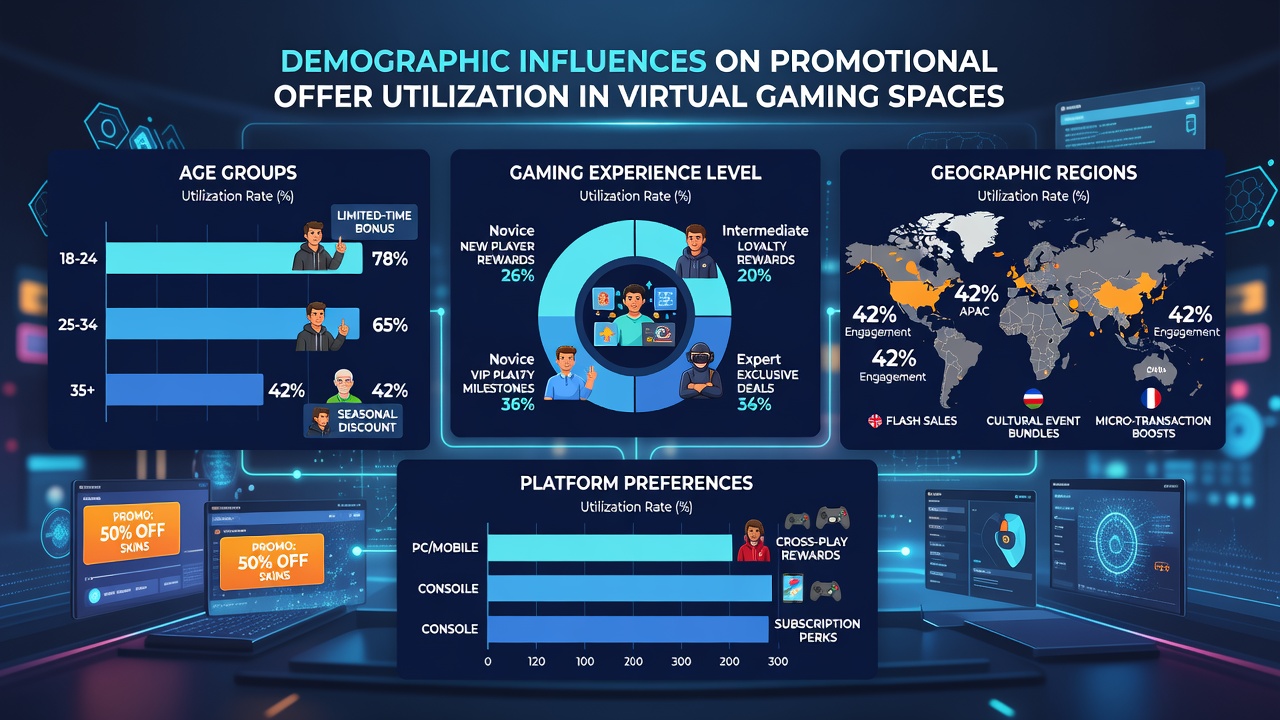
One analysis of U.S. state-licensed platforms linked higher education levels with increased scrutiny of playthrough multipliers, resulting in more selective acceptance of offers that carried restrictive conditions. Meanwhile, lower-income groups showed elevated engagement with no-deposit bonuses that require minimal financial commitment to test platform features.
Platform Adaptations and Emerging Metrics
Operators have begun segmenting promotional campaigns using demographic filters derived from verified account data, allowing targeted delivery that matches observed preference clusters. In August 2026 several platforms introduced region-specific bonus structures after reviewing utilization logs that highlighted stark differences between metropolitan and regional user bases. These adjustments include simplified claim processes for demographics that historically abandoned offers midway through verification steps.
Industry associations such as the American Gaming Association have published summaries of anonymized player data that underscore the value of tailoring creative assets to age and location cohorts. Parallel work by the National Center for Responsible Gaming examines how demographic variables intersect with responsible gaming tool adoption, providing operators additional context for designing compliant promotions.
Conclusion
Demographic segmentation continues to shape how virtual gaming operators design and distribute promotional offers. Metrics gathered through 2026 demonstrate that age, gender, income, education, and location each contribute distinct patterns to redemption behavior. Platforms that adjust campaigns according to these verified differences report more efficient allocation of marketing resources while maintaining compliance with regional regulations. Ongoing data collection will likely refine these understandings as player bases evolve and new offer formats emerge.