Shifts in Reward Structures Tied to Seasonal Player Habits Within Virtual Card Environments
Written by Harper Keller · Aug 3, 2026
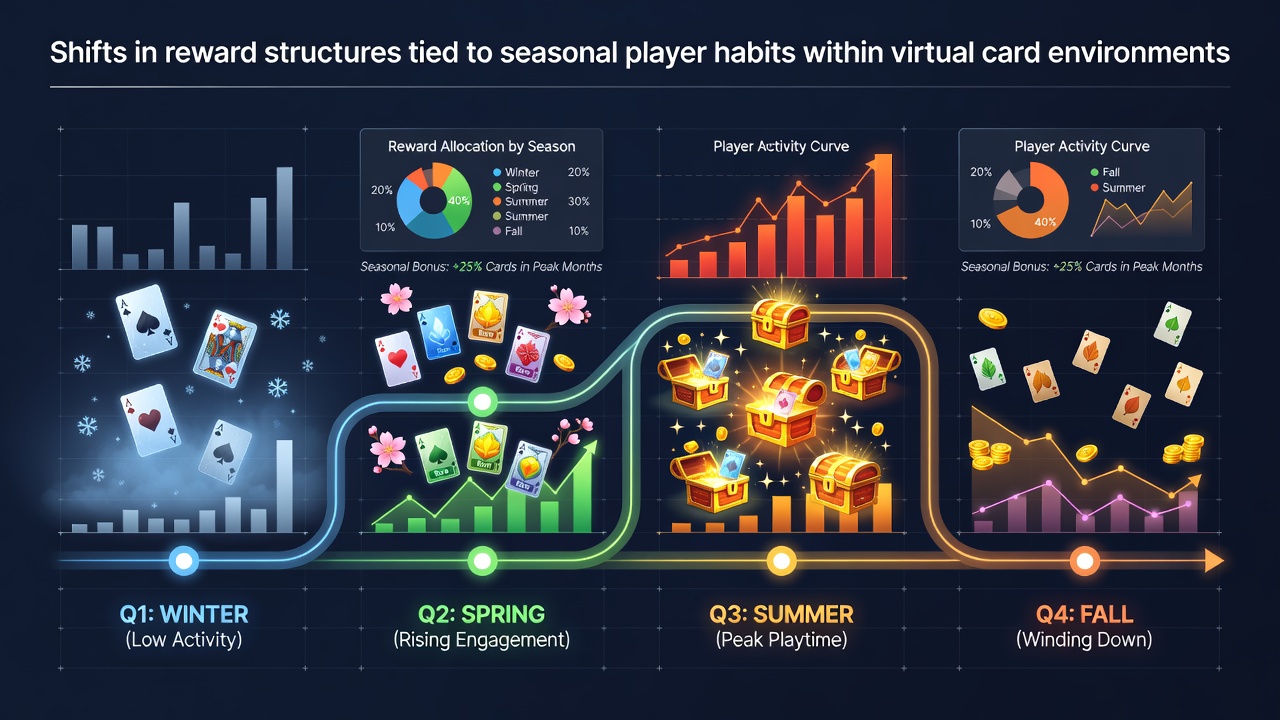
Shifts in Reward Structures Tied to Seasonal Player Habits Within Virtual Card Environments
Virtual card environments have seen measurable changes in reward structures as developers respond to documented patterns in player activity across different times of the year, and data from multiple platforms shows that participation levels fluctuate with academic calendars, holiday periods, and regional weather trends. Researchers tracking user logs from 2024 through mid-2026 found that engagement in games such as digital collectible card titles rises sharply in late summer months while dipping during major examination seasons in North America and Europe.
Documented Seasonal Engagement Trends
Analytics firms monitoring virtual card platforms report consistent spikes in log-in frequency during August, when many students begin new terms yet retain flexible evening schedules, and one 2025 industry dataset indicated a 14 percent increase in average session length compared with spring months. Developers adjust progression systems accordingly, extending the duration of limited-time reward tracks to align with these windows of higher availability, while shortening daily login bonuses during periods when users demonstrate reduced access. Observers note that back-to-school transitions in August 2026 produced similar upticks, with platforms registering elevated completion rates for weekly challenge sets that award card packs and cosmetic items.
Mechanics Behind Reward Adjustments
Companies operating virtual card environments modify reward pools by altering the probability distribution of rare cards during high-traffic seasons, and evidence from server-side logs demonstrates that increased drop rates for mid-tier rewards correlate with sustained daily returns. During winter holiday periods, for instance, events introduce bundled reward tiers that require cumulative play over consecutive days, a design choice that capitalizes on extended free time reported by users in temperate climates. These structural shifts appear in battle-pass frameworks where experience multipliers scale upward in August and December, then contract in January and September when participation metrics decline according to aggregated telemetry from leading titles.
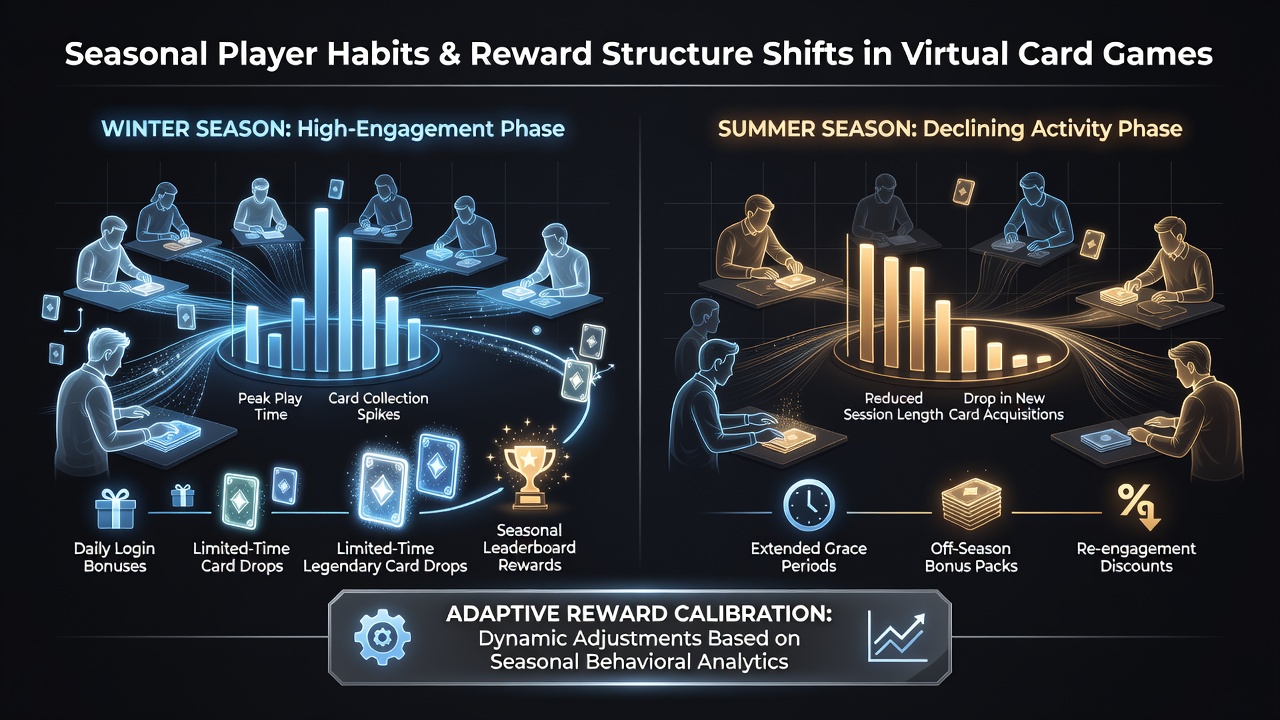
Platform operators also recalibrate in-game currency distribution, directing more free-to-play resources toward event-specific milestones that coincide with observed peaks in new account creation, which studies link to post-summer promotional campaigns. Those who have examined player retention curves across multiple regions note that reward structures emphasizing social features, such as friend referral bonuses, gain prominence during summer months when group play sessions increase.
Regional Variations and Data Sources
Reports from the International Game Developers Association highlight how reward pacing in Asia-Pacific markets differs from North American patterns, with developers introducing school-break aligned events in July and August that emphasize cooperative card battles rather than individual progression. In contrast, Australian data compiled by the Interactive Games and Entertainment Association shows reward structures that favor evening login streaks during winter months when indoor gaming activity rises. These geographic distinctions influence how developers allocate development resources for seasonal content updates, resulting in staggered release schedules that match documented habit shifts.
Academic analyses published in the Journal of Computer-Mediated Communication further indicate that reward visibility, such as leaderboard resets timed to new academic years, produces measurable changes in competitive play volume, and one longitudinal study covering 2023-2026 tracked over 2.3 million accounts to confirm that players respond to these timed incentives with higher retention rates through the first quarter following each reset.
Effects on Long-Term Player Metrics
Retention statistics compiled across virtual card platforms reveal that seasonal reward recalibrations correlate with reduced churn during transition periods, although the magnitude varies by title age and player tenure. Newer environments tend to implement more aggressive reward front-loading in August to capture incoming users, whereas established titles focus on deepening existing progression tracks with layered seasonal objectives. Data indicates that when reward structures incorporate flexible completion windows, players maintain consistent engagement across fluctuating external schedules, a pattern confirmed in multiple platform reports spanning 2025 and 2026.
Conclusion
Virtual card environments continue to refine reward structures in direct response to verified seasonal player habits, with adjustments documented through telemetry, academic research, and industry datasets that span multiple continents. These changes manifest in altered progression pacing, event timing, and resource allocation that align with recurring fluctuations in user availability and activity levels. As platforms gather additional data through 2026 and beyond, reward frameworks are expected to incorporate increasingly granular seasonal variables drawn from regional engagement records.